Many industrial organisations are investing heavily in operational intelligence and AI-enabled safety initiatives. Yet one reality remains unchanged: safe work execution still depends on disciplined control of work.
Electronic permit-to-work (ePTW) systems remain one of the most important operational platforms in hazardous industries.
But not all ePTW systems deliver the same outcomes.
In practice, the difference between an average implementation and an excellent one is unrelated to the number of AI features. The question is whether the system genuinely improves safety management, operational coordination, accountability and frontline execution under real plant conditions.
For organisations striving toward operational excellence and safety excellence, one critical pillar of your safety is your permit to work process. This cannot be left to chance or some “AI Agent” that might hallucinate and mislead personnel working in extremely dangerous environments. Letting AI loose on your safety process would be irresponsible until a solid foundation is in place.
For the IntelliPERMIT team, this principle has shaped the platform from the beginning. The solution was developed specifically for hazardous industrial environments where permit-to-work is not simply an administrative workflow, but a safety-critical operating discipline involving operations, maintenance, contractors, isolations, SIMOPS and governance assurance.
Excellent ePTW Is About Operational Discipline, Not Just Digitisation
Many ePTW projects begin with good intentions but focus too heavily on digitising forms instead of fundamentally improving control of work.
This often leads to systems that appear capable technically but struggle operationally because they introduce:
- unclear workflows
- excessive administrative burden
- poor frontline usability
- inconsistent authorisation practices
- fragmented coordination between departments
Excellent ePTW should make safe work execution clearer, faster and more disciplined.
For example, IntelliPERMIT is designed to provide operational visibility across permits, isolations, work activities and approvals so that operations, maintenance and safety teams can coordinate hazardous work in a controlled and auditable way. In contrast to opaque AI black boxes, IntelliPERMIT makes every decision, risk and exception transparent and subject to rigorous human oversight.
That visibility becomes especially important during:
- shutdowns and turnarounds
- simultaneous operations
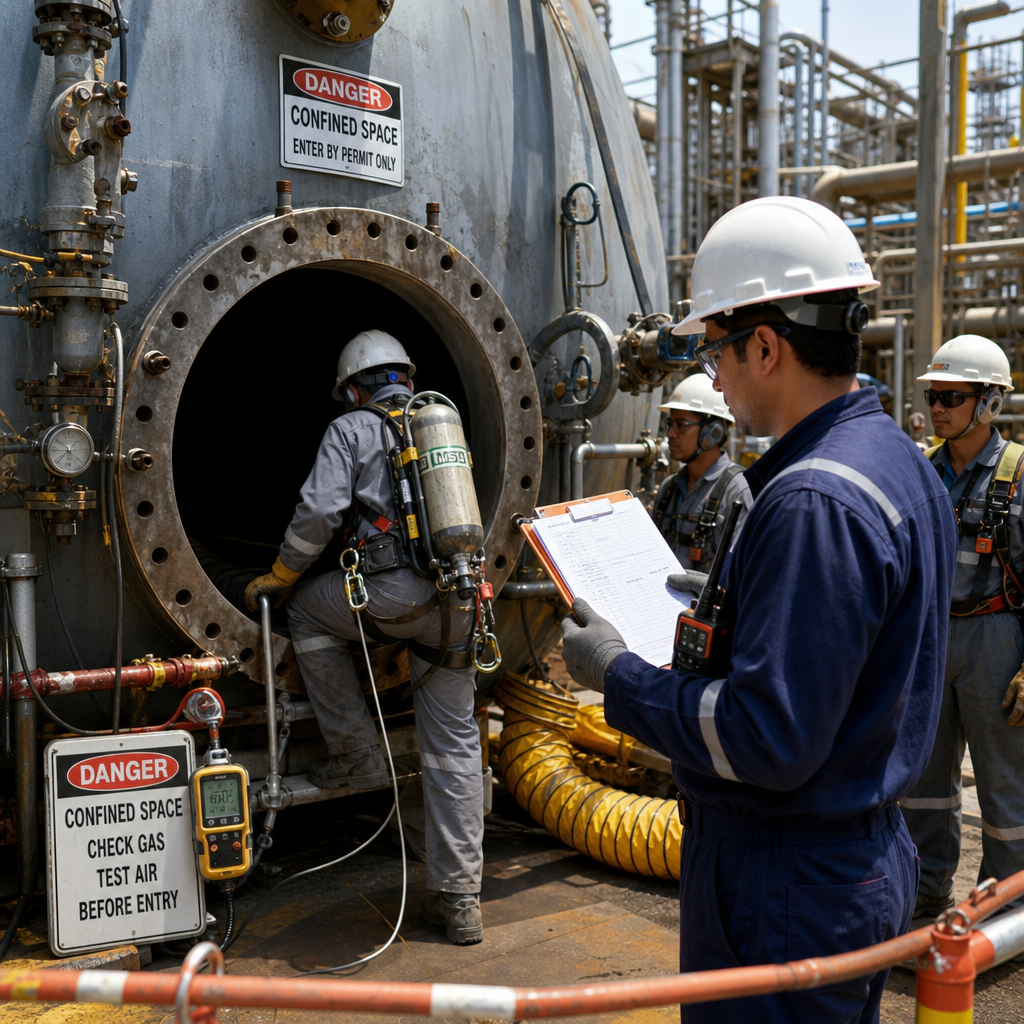
- confined space entry
- hot work coordination
- contractor management
- shift handovers
What Frontline Teams Need From an Excellent ePTW Platform
The success of any permit-to-work system depends heavily on frontline adoption.
If users find the system slow, confusing or disconnected from operational reality, workarounds quickly emerge — creating risk, inconsistency and governance gaps.
Excellent ePTW platforms support the way industrial teams actually work. The human interface is critical. IntelliPERMIT was designed from the start to be “user friendly” and the way people actually work in plants, factories and mines.
Clear workflows and status visibility
Frontline personnel need immediate clarity around:
- permit status
- approvals
- isolations
- work conflicts
- handovers
- suspended permits
IntelliPERMIT helps simplify this coordination by presenting permit and isolation relationships clearly, reducing ambiguity between issuing authorities, performing authorities and operational teams.
This becomes critical when multiple high-risk activities occur simultaneously across a plant or site.
Practical usability under operational conditions
Industrial environments are fast-moving and often high-pressure. Systems that require excessive navigation, duplicate data entry or overly complex workflows can reduce adoption quickly.
IntelliPERMIT focuses strongly on operational usability, enabling both experienced users and occasional users to work within governed workflows without unnecessary complexity.
This is particularly important for contractors, shift personnel and shutdown teams who may need to interact with the system under time-sensitive conditions.
Coordination across departments
Excellent control of work requires alignment between operations, maintenance and safety functions.
IntelliPERMIT was designed around this operational reality, helping organisations coordinate permit activities, isolations and approvals across multidisciplinary roles while maintaining clear accountability.
This reduces the risk of siloed decision-making or conflicting work activities.
What Business Leaders Need
Operational usability alone is not enough. Strong governance remains central to excellent safety management.
Leadership teams need confidence that permit controls are applied consistently, correctly and transparently. They will be held accountable for an incident. In this situation the CEO cannot simply blame an AI agent for a poor decision made on the plant.
Strong authorisation and accountability
Excellent ePTW platforms should reinforce governance discipline through:
- role-based approvals
- controlled authorisation pathways
- competency-linked permissions
- escalation workflows
- full audit traceability
IntelliPERMIT supports these governance requirements through configurable approval structures aligned to site procedures and operational responsibilities.
This helps ensure that only authorised personnel can approve, suspend or close permits according to defined governance rules.
Auditability and assurance
One of the major strengths of digital permit systems is improved operational traceability.
IntelliPERMIT provides auditable records covering:
- permit approvals
- isolation verification
- handovers
- permit suspension
- revalidation activity
- work history
This creates stronger assurance for both internal governance and external compliance requirements while supporting operational reviews and incident investigations where required.
Why the Basics Still Matter Before Advanced AI
Across industry, there is growing discussion around AI-enabled safety platforms, predictive analytics and advanced operational intelligence tools.
These technologies may offer value, but organisations should be careful not to overlook foundational control-of-work discipline.
In many environments, the biggest operational risks still come from:
- inconsistent permit processes
- weak authorisation controls
- poor shift handovers
- fragmented isolation management
- limited auditability
- low frontline adoption
Advanced analytics cannot compensate for weak operational foundations.
Before organisations pursue sophisticated AI-driven safety initiatives, they should first ensure their core permit-to-work and control-of-work processes are mature, consistent and operationally effective.
Excellent ePTW creates the structured operational discipline that more advanced safety initiatives depend on.
A Practical Checklist for Evaluating ePTW Platforms
When evaluating permit-to-work solutions, organisations should focus less on generic feature lists and more on operational effectiveness.
Key questions include:
- Does the system simplify or complicate frontline execution?
- Can it manage real operational scenarios such as SIMOPS, isolations and shift handovers, with clear human oversight?
- Are approval and competency controls clear and auditable?
- Does it support coordination between operations, maintenance and safety teams?
- Can the workflows align with site-specific governance without becoming over-engineered?
- Is the system practical for contractors and occasional users?
- Does reporting support operational assurance and compliance evidence?
- Has the solution been proven in hazardous industrial environments?
Buyers should also ask vendors to demonstrate realistic use cases rather than relying solely on standard product demos.
Excellence in Safety Management Requires Excellence in Control of Work
Organisations pursuing operational excellence increasingly recognise that permit-to-work is not simply a compliance requirement or digitisation exercise. It is also not a playground for experimenting with emerging AI technologies without a solid foundations in the core safety processes.
ePTW is one of the core systems that governs how hazardous work is planned, authorised, coordinated and executed safely.
Excellent ePTW platforms help organisations strengthen operational discipline, improve accountability and support safer decision-making across the entire work management process.
That is why many industrial organisations continue to prioritise specialist permit-to-work platforms with deep domain capability, mature governance design and proven operational fit.
If your organisation is reviewing its permit-to-work approach, IntelliPERMIT can help you evaluate what excellent control of work should look like in practice — from frontline usability through to governance integrity and long-term operational assurance.