A permit delay can hold up critical maintenance. A poorly prepared permit can expose people to uncontrolled risk. For operations management, the challenge is to run an efficient control of work process without weakening the safety procedures, risk assessment and personal accountability that underpin industrial safety.
That challenge becomes more important as electronic permit to work systems, workflow tools and AI capabilities enter the discussion. Technology can improve visibility, coordination and compliance. It cannot be allowed to replace the thinking, competence and communication required to authorise hazardous work safely.
A permit to work is therefore far more than a form, whether it is printed on paper or displayed on a screen. The permit to work process is a structured safety conversation between the people who understand the plant, the work and the risks.
Permit to work: why the process exists
Permit to work systems emerged from the need to control non-routine, hazardous work in complex operating environments. Plants, mines, terminals and energy facilities contain stored energy, hazardous substances, moving equipment, confined spaces, live electrical systems and process conditions that can change during a shift.
Routine work is generally managed through established operating procedures. Non-routine work requires a more deliberate intervention. Such work may involve:
- Breaking containment on process equipment
- Electrical isolation and Lockout/Tagout
- Hot work near flammable materials
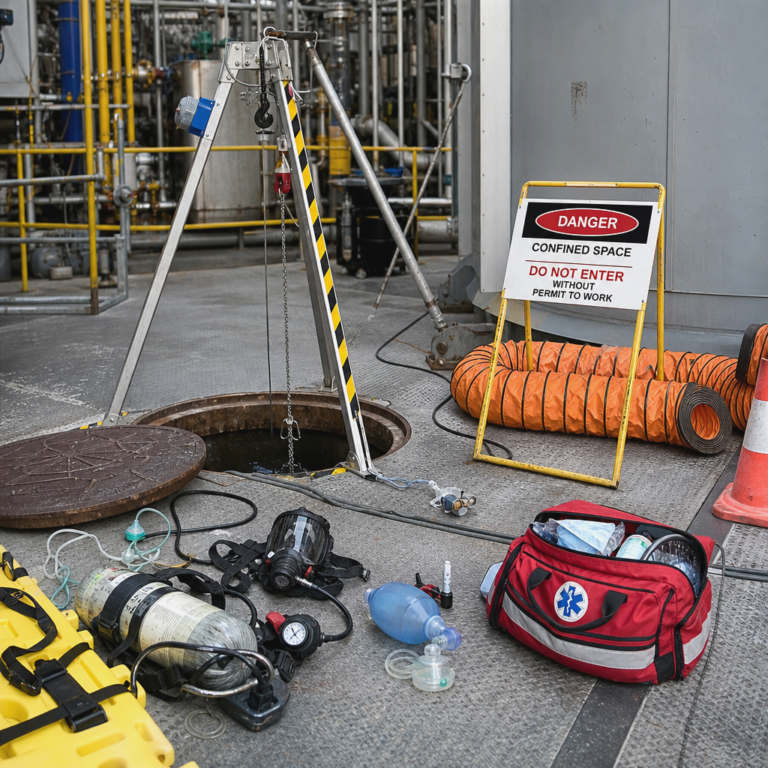
- Entry into confined spaces
- Work at height
- Excavation
- Lifting operations
- Maintenance during plant shutdowns
- Simultaneous operations, commonly known as SIMOPS
In these circumstances, the permit to work provides a formal process for agreeing what will be done, where it will be done, what hazards exist, which controls are required and who is authorised to proceed.
The permit brings several parties into a standard, approved safety process. These may include the work initiator, area authority, permit issuer, isolations authority, performing authority, operations representative, safety team and contractor supervisor. Each has a different perspective. The value comes from bringing those perspectives together before work starts.
A permit signature is not a mere administrative formality. It is an acknowledgement that the person signing understands their responsibility and has considered the work within their authority.
Control of work is a communication discipline
A strong control of work system prevents a common failure in hazardous operations: people acting on incomplete information.
A maintenance team may understand the repair required. Operations may understand current plant conditions. The isolations authority may understand the energy sources. The safety team may understand recurring incident risks. Contractors may know the practical challenges of the task. If these people work in parallel without a structured process, communication gaps are inevitable.
The permit to work process creates the necessary communication points:
-
Work is defined clearly.
The scope, location, equipment and expected duration must be understood. Vague descriptions produce vague controls. -
Hazards are identified.
The team considers process, mechanical, electrical, environmental and human factors that may affect the task. -
Safety controls are agreed.
These can include isolations, gas testing, barriers, PPE, rescue arrangements, supervision requirements and restrictions on adjacent activities. -
Responsible people approve the work.
Approval confirms that the work may proceed under the stated conditions. It also assigns accountability. -
Conditions are monitored during execution.
A permit is valid only while its assumptions remain true. Changing plant conditions, weather, shift changes or SIMOPS may require the permit to be reassessed. -
The work is handed back safely.
On completion, the area, equipment and isolations must be returned through a controlled process, and the people involved released to take on other responsibilities and activities.
This is why permit to work remains established best practice across mining, oil and gas, manufacturing and energy. It connects the work itself to the site’s wider safety management system.
Safety procedures must be applied, not merely recorded
Every hazardous site has rules for safe work. These may include standards for isolations, confined-space entry, hot work, lifting, excavation, working at height, contractor management and shift handover.
The permit to work system is where those rules become active in the field.
A well-designed permit system should direct people to the relevant safety procedures at the point of need. It should make mandatory controls clear and prevent unauthorised work from progressing. It should also recognise that not every job requires the same level of intervention.
For example, a hot-work permit near a hydrocarbon process area will always require gas testing, fire watch arrangements, area preparation and restrictions on nearby work. A simple workshop task may require much less. Treating both activities in the same way creates unnecessary administration and encourages people to see the system as a burden.
The aim is disciplined application of site rules, with attention focused on the exceptions, hazards and conditions that matter to the job.
Good systems reduce unnecessary effort without reducing control.
Risk assessment requires judgement and experience
The central weakness of many permit systems is “rote” completion of the permit form.
People learn which boxes are normally ticked, which phrases are accepted and which signatures are needed to keep work moving. Over time, the permit can become an exercise in reproducing familiar answers rather than examining the real conditions of the task.
This problem exists with paper permits and with poorly designed electronic systems.
A digital form can make rote completion faster. It can present standard answers, copy information from earlier permits and allow users to move through screens with little reflection. An AI-assisted system could take the problem further if it begins generating plausible risk assessments and control measures that users accept without proper challenge.
A risk assessment is not safe merely because it looks complete and ticks the boxes.
The person preparing the permit must apply their mind to the work. They need to ask practical questions:
- What could harm people during this job?
- What energy sources or hazardous materials are present?
- Which isolations are required, and have they been verified?
- What could change while the work is underway?
- Are there conflicting activities in the area?
- Are all participants competent and authorised for their roles?
- Does the task require a specialist procedure, rescue plan or additional supervision?
- Do the stated controls deal with the actual risks, or are they generic phrases copied from previous work?
Software can guide this thinking. But software should not create an illusion that it has done the thinking on behalf of the responsible person.
Industrial safety depends on competent role players
A permit to work process assumes that people are competent to carry out their responsibilities. The system can validate whether an individual has the required authorisation, training or qualification. It can prevent an unauthorised person from issuing or accepting a permit. These are valuable controls.
However, competence is more than a database record.
An experienced area authority may notice that an adjacent line is due to be pressurised later in the day. A maintenance supervisor may identify that a standard isolation does not deal with a trapped pressure source. An operator may recognise that weather conditions make a lifting plan unsuitable. A contractor supervisor may know that the planned access route is obstructed.
These observations come from plant knowledge and professional judgement. A permit system must create the space for them to be raised and dealt with.
This is particularly important at large mining operations, where maintenance work, production activities, mobile equipment, contractors and changing environmental conditions can create complex interactions. The same applies in refineries, chemical plants, power stations and manufacturing facilities with tightly integrated processes.
Technology should support competent people in making better decisions. It should never provide a route around their responsibility.
Where digital permit to work support adds value
Digitalisation can materially improve control of work when it strengthens communication, visibility and compliance.
Appropriate system support includes:
Real-time visibility of work in progress
A central permit register gives operations, maintenance and safety teams a current view of authorised work. This helps teams identify overlapping activities, restricted areas and potential SIMOPS conflicts before they become incidents.
A paper permit board may show some of this information. It is however difficult to keep complete, current and visible across multiple departments, shifts or work fronts.
Site-specific rules and workflows
A mature electronic permit to work system can apply the site’s own procedures, terminology, approval requirements and risk controls. It can route permits to the right authorised people and ensure required checks are completed before the permit is issued.
The system should be configured around the operation’s established control framework, not force the site into a generic IT workflow.
Competence and authorisation checks
The system can confirm whether a person holds the necessary authority for a role or permit type. This helps prevent a permit from being issued, accepted or closed by someone who is not authorised to do so.
It also provides useful evidence during audits and investigations.
Integration of isolations and work control
Permit to work and isolation management are closely connected. Digital systems can link the work permit to an isolation certificate, isolation points, verification steps and reinstatement controls. This improves traceability and helps reduce the risk of work commencing before energy sources have been made safe.
Better shift handover
Shift changes are a recognised point of risk. A digital control of work system can make current permits, active isolations, restrictions and outstanding actions visible to the incoming team. This gives handover conversations a clearer foundation than scattered paper records or verbal updates alone.
Controlled prompts and hazard awareness
The system can make users aware of relevant hazards, required procedures and nearby activities. For example, it may flag SIMOPS, a hazardous area classification, a planned lifting operation or an active isolation affecting the same equipment.
These prompts are useful because they bring information to the right person at the right time. They must still require the user to consider the relevance of the information to the actual job.
AI and permit to work: assist judgement, do not replace it
AI introduces an additional consideration because it is probabilistic. It can produce useful suggestions, but it can also produce incomplete, incorrect or inappropriate outputs with considerable confidence.
This cannot be a suitable basis for delegating safety-critical judgement!
There are legitimate uses for AI in a control of work environment. It may help users locate relevant procedures, identify similar past work, summarise permit status, highlight potential conflicts or bring attention to missing information. Used carefully, it can reduce time spent searching for information and improve situational awareness.
But the boundary must remain clear.
AI may assist a permit user to find relevant information. The accountable people must still decide whether the information applies, whether the risk assessment is adequate and whether work can proceed safely.
An AI system should not silently generate controls that are accepted without review. It should not become a substitute for competent supervision. It should not give users an easy way to abdicate their responsibility for identifying hazards.
The safety objective must govern the technology, including the design of any AI capability.
The paper permit problem did not disappear with digitisation
Paper permits were often viewed as safer than early computerised systems because paper did not appear capable of taking over the thinking required to prepare a permit. There was some truth in that concern.
However, paper also has significant weaknesses:
- It is difficult to obtain a complete view of all current work and isolations.
- Permit information may be unavailable to people outside the immediate area.
- Handwritten records can be unclear, incomplete or lost.
- Auditing is labour-intensive.
- SIMOPS conflicts can remain hidden across departments.
- Standard answers can be copied from one permit to another.
- Tick-box behaviour can become entrenched.
A digital equivalent of the same paper form does not solve these problems automatically. It may simply amplify the inherent weaknesses in a poorly designed form that has no built in “intelligence”.
The quality of a digital permit to work system depends on its safety design. It should combine clear procedural enforcement with structured opportunities for people to think, challenge assumptions and communicate with one another.
How to evaluate a digital permit to work system
When evaluating an e-PTW solution, look beneath the demonstrations of dashboards, integrations and AI features. Those capabilities may be useful, but they do not determine whether the system will improve safe work.
Ask the following questions.
Does the system in any way take over the responsibility for safety from the people involved?
Examine how the system ensures that users always apply their minds at every step of the process, while at the same time checking for unsafe decisions and high risk situations. The system needs to intelligently ask the user to fill out and process the permit, and only raise exceptions when necessary and where there is a legitimate safety concern. The users need to feel guided and supported by the system, but in no way able to abdicate to it.
Does the system strengthen risk assessment?
Examine the way it supports job-specific hazard identification and control selection. Does it encourage meaningful consideration of the work, or does it make it easy to copy generic answers and move on?
A good system uses prompts, work categories and risk controls to structure the assessment. It still requires accountable people to apply their judgement.
Does it reflect your site safety procedures?
The system must support the site’s established rules for safe work, permits, isolations, approvals, extensions, suspensions and handbacks. Generic workflows are rarely sufficient in complex industrial environments.
Look for configuration depth, not just a long list of standard forms.
Can it make SIMOPS and changing conditions visible?
A permit can be technically correct when issued and unsafe two hours later because another activity starts nearby, process conditions change or a shift handover is incomplete.
Assess whether the system provides practical visibility of concurrent work, plant status, isolations and restrictions.
Does it validate competence and authority?
The system should ensure that only authorised and competent people can perform safety-critical permit roles. It should also maintain a clear audit trail of who reviewed, issued, accepted, suspended and closed the permit.
Does it manage exceptions without creating unnecessary administration?
A good control of work system should make routine, compliant work straightforward while drawing attention to unusual conditions, conflicts and deviations. If every task requires the same heavy process, users will find ways around it. If the system is too permissive, critical controls may be missed.
The design must suit the risk.
Does the supplier understand operational safety?
This is a practical test. Ask how the provider approaches risk assessment, isolations, SIMOPS, contractor work, shift handover and user competence. Listen for evidence of operational understanding rather than generic workflow terminology.
Permit to work should never be treated as a minor module within a wider software implementation. It is a core safety process with direct consequences for people and plant.
IntelliPERMIT: built around the human safety process
IntelliPERMIT was designed from the outset to support people in applying their knowledge and experience to safe work.
Its earliest implementation at AECI Bioproducts in 1995, IntelliPERMIT established an important principle: the system should reinforce training, site procedures and accountability rather than take cognitive responsibility away from permit users. Operations management quickly realised that such procedural reinforcement was a very a practical part of the system’s value.
Over the following decades, IntelliPERMIT has continued to develop across hazardous industrial environments. The underlying approach remains consistent:
- Support the permit initiator and role players with relevant information.
- Apply site rules, authorisation requirements and approval workflows consistently.
- Make hazards, isolations, restrictions and concurrent work more visible.
- Maintain an auditable record of the permit lifecycle.
- Preserve the requirement for competent people to consider the job, identify risks and make accountable decisions.
This balance is deliberate by design. Safe work depends on better information, clearer coordination and disciplined procedures. It also depends on people thinking carefully about the work in front of them.
Choose the system that protects the purpose of the permit
Electronic permit to work systems can improve compliance, productivity and industrial safety. They can also embed poor habits across an organisation if they reduce a critical safety process to a sequence of screens, copied answers and automatic approvals.
A thorough evaluation is worth the effort.
Do not select a permit system simply because it is part of a larger platform programme, has an impressive integration diagram or includes AI in its product description. Assess whether it strengthens communication, applies site safety procedures properly, supports meaningful risk assessment and keeps responsibility with competent people.
Once weak control of work practices are embedded across a plant, changing course becomes difficult and expensive.
If your operation is reviewing an e-PTW system, contact Adapt IT to discuss how IntelliPERMIT supports disciplined, auditable control of work while keeping safety judgement where it belongs: with the people responsible for the work.