
Port operations do not pause. Vessels arrive on schedule pressure, cargo plans change with the weather, and maintenance often has to happen in the narrow windows between loading cycles. In that environment, digital safety software for ports and harbours is not a “nice-to-have” administrative tool—it is a practical way to keep high-risk work controlled without slowing down throughput.
At the same time, ports and harbours are not typical industrial sites. They combine marine interface risks, heavy mobile plant, lifting operations, contractors rotating across terminals, and simultaneous operations (SIMOPS) in tight footprints. IntelliPERMIT is ideally suited for port and harbour applications by virtue of its robust, proven design for industrial environments, as well as its ability to be configured for the unique workflow processes typically encountered in busy ports. A port can no longer “just adopt” generic safety software and hope for the best. This article provides some context of how IntelliPERMIT supports operational safety processes in a busy port.
Digital safety software for ports and harbours: why ports are different from other industrial sites
Ports and harbours share hazards with mining, oil & gas, and heavy manufacturing—but the mix and overlap of work is often more complex:
- SIMOPS by default: Cargo handling, marine services, traffic movements, and maintenance can occur within metres of each other.
- A fluid workforce: Multiple contractors, short-duration work packs, and changing supervision structures across shifts.
- Wide geographic spread: Terminals, workshops, quayside assets, and landside logistics zones make “visibility of work” difficult.
- High consequence events: A single serious incident can stop operations, trigger a multi-agency investigation, and create reputational and financial impacts.
A control-of-work approach that is merely “digitised paperwork” typically fails in a port. What is needed is a system that enforces the workflow, supports real operational decision-making, and produces an auditable record of who authorised what—and why—when conditions change.
Digital safety software for ports and harbours vs generic safety platforms: where the gaps show up
Generic safety management platforms are often strong on broad capability—incident reporting, audits, training registers, document libraries. Those are important, but ports and harbours frequently need depth in permit-to-work (PTW) and isolation governance, with operational speed and clarity across terminals and contractors.
Common shortcomings of generic tools in port environments include:
- Workflows that don’t match reality: Ports often require permit steps that change by terminal, asset class, or cargo type (e.g., bulk materials handling vs container operations vs workshop maintenance). If the system does not match the way people actually work, it will be rejected.
- Slow adoption under time pressure: If the system adds friction at the workface, the workforce will create workarounds (calls, texts, informal approvals), weakening governance.
- Weak SIMOPS control: A port needs to understand what work is active where—and whether two permits conflict by location, energy source, or operational interface.
- Limited practical isolation control: Lockout/Tagout and isolations require clear ownership, verification steps, and traceability, especially when multiple teams interact with the same asset.
The port safety manager should not be asking the question “Do we have a digital system?” but rather “Can we prove control-of-work is consistently applied across shifts, terminals, and contractors?”
Permit to work in ports: controlling high-risk activities without slowing the operation
Permit to work in ports must support both planned maintenance and fast-changing operational work. The goal is not to create bureaucracy—it is to ensure that high-risk work is authorised, risk assessed, isolated where required, and properly handed over.
In practice, a port PTW process often needs to handle:
- Hot work near flammable cargo residues or fuel systems
- Confined space entry in ship holds, tanks, culverts, or enclosed plant rooms
- Work at height on ship loaders, conveyors, lighting towers, or cranes
- Electrical and mechanical maintenance with multi-source energy isolation
- Lifting operations with moving exclusion zones and changing ground conditions
- Quayside activities where marine operations and terminal operations intersect
A well-implemented digital PTW capability supports consistent permit creation, clear approvals, role-based responsibilities, and controlled close-out—especially when teams change mid-task.
Shift handover: where port permit discipline often breaks down
Shift handovers are a known weak point in 24×7 operations. The risk is not only incomplete information, but false confidence—believing a permit is in a safe state when conditions have changed.
A practical digital approach strengthens handover by ensuring that:
- Active permits and isolations are clearly visible
- Responsibilities transfer explicitly (not informally)
- Revalidation occurs when conditions change (weather, access, marine movements, equipment status)
Control of work in ports: building operational discipline that stands up to audit
Control of work in ports is bigger than permits. It is the combined system of PTW, isolations, risk assessment, competency checks, authorisations, and evidence capture.
For port leadership, this matters because investigations and audits commonly ask questions such as:
- Who authorised the work, and were they competent/authorised to do so?
- Was the risk assessment appropriate for the task and location?
- Were isolations applied, verified, and removed under control?
- What changed during the job, and was the change managed?
A digital control-of-work solution is valuable when it reduces interpretation and variability. Rather than relying on “the right person being on shift”, the workflow guides the process and captures the record consistently.
Bulk materials handling: why port safety needs stronger control-of-work
Bulk materials handling creates unique, high-energy risks: conveyors, transfer chutes, stackers/reclaimers, ship loaders, mobile plant interface, and dust and spillage hazards. Maintenance activities in these environments are often high risk because they occur on large, complex assets with stored energy and multiple isolation points.
A control-of-work system must handle the practical realities:
- Complex isolations across widely distributed electrical, mechanical, hydraulic, and pneumatic energy sources
- Multiple workgroups interacting with one asset (maintenance, operations, contractors)
- Changing access routes and exclusion zones as bulk handling equipment moves
- Time pressure to return an asset to service to meet vessel schedules
The operational benefit is not only safer work, but improved clarity on what is safe to start, what must wait, and what needs coordination across a live terminal.
Port safety and Harbour safety: managing contractors and overlapping responsibilities
Port safety and harbour safety governance is often tested most by third party contractor activity. Ports may have dozens of contracting firms active across a week, with varying competency standards, supervision quality, and familiarity with site rules.
A consistent, enforceable workflow helps manage this variability by:
- Checking role-based permissions (who can raise, approve, and accept permits)
- Supporting competence and authorisation requirements for safety-critical steps
- Standardising the minimum risk control expectations while still allowing terminal-specific detail
- Producing a clear audit trail that shows decisions were made by the right people
For mixed ports, the contractor challenge is magnified: the port may be managing industrial maintenance one hour and a marine interface activity the next. That is where configurable templates and workflows become practical—not “custom software”, but configurable governance that matches how the port actually operates.
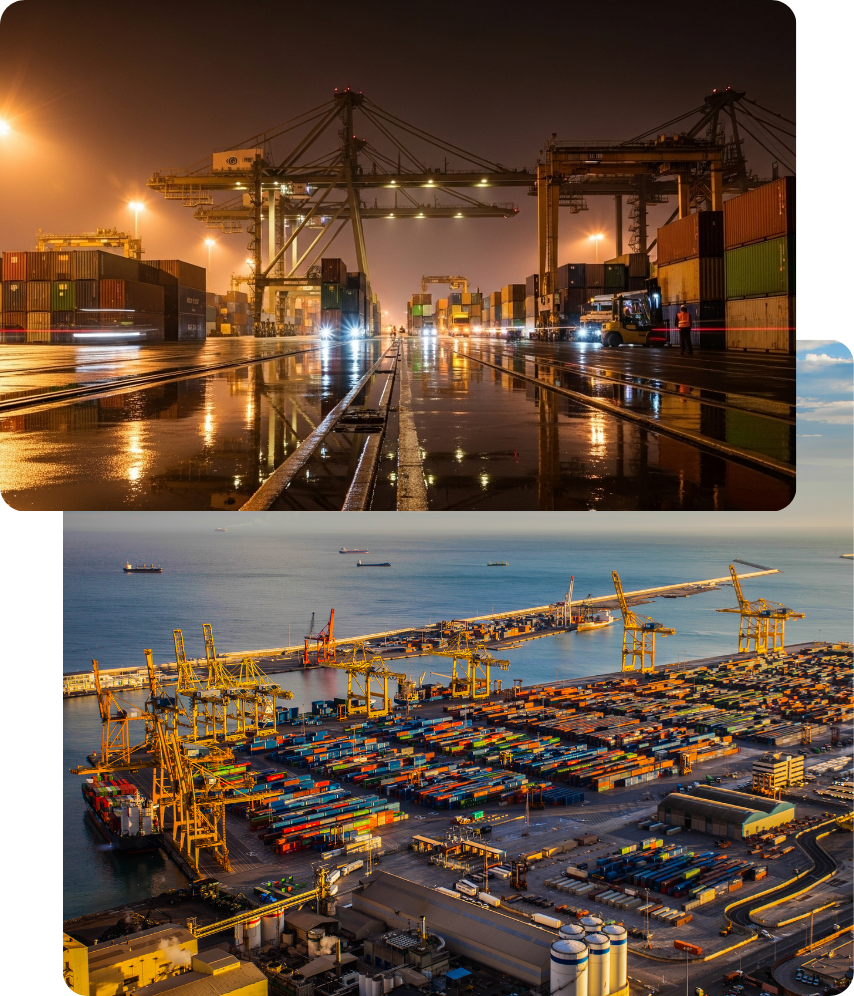
Digital safety software for ports and harbours in practice: what implementation can look like
Ports often worry that adopting a control-of-work system means a long, high-disruption programme. The reality is that successful implementation is usually staged: start with the highest-risk permits and the most operational pain, then expand.
In practice, IntelliPERMIT has been implemented in industrial contexts that align closely with port risk profiles:
- In Western Australia, IntelliPERMIT is being implemented at a major port handling bulk materials alongside other logistical and operational activities.
- IntelliPERMIT has also been implemented in mining contexts connected to export logistics in both Western Australia and South Africa, where control-of-work discipline and isolation governance are critical across contractor-heavy environments.
- In South Africa, IntelliPERMIT together with FlexiLOG was customised to meet unique operational requirements of an export harbour; the flexible template approach and workflow configuration proved effective for aligning the system to site-specific processes without losing governance consistency.
These examples are relevant because they reflect a common reality: ports and harbours often require a system that can be standardised while still accommodating terminal-by-terminal differences.
Spreadsheets, paper, and “all-in-one” platforms: realistic comparisons for port operators
Spreadsheets and manual systems
Spreadsheets can feel quick and familiar, but they struggle in a 24×7, multi-terminal environment because they are:
- Error-prone (version control, incomplete fields, inconsistent terminology)
- Hard to audit (who changed what, when, and under what authority)
- Weak on real-time visibility (what work is active right now, and where?)
- Difficult to sustain across contractors and shifts
The operational cost is often hidden: time spent chasing status, re-work after incomplete permits, and fragile evidence during audits or investigations.
Large integrated safety suites
Enterprise safety suites can offer wide-ranging functionality including control of work, but for ports their downsides are often practical:
- Longer implementation programmes due to scope and integration complexity
- More configuration overhead than needed for core PTW/control-of-work outcomes
- Risk of overbuilding a system that the frontline perceives as “corporate” rather than operational
For many ports, the better path is a fit-for-purpose control-of-work system that can integrate where needed, without requiring a massive transformation programme to deliver value.
Practical steps: how to progress the case for digital control-of-work in your port
For Operations Managers, Safety Officers (SHEQ), Maintenance Planners, and Plant Managers, the most effective next steps are pragmatic:
Map your highest-risk work types
Identify the permits and isolations most associated with serious incident potential: confined space, hot work, electrical isolation, lifting, work at height, mobile plant interface.Document the failure points in the current process
Where does it break under pressure—handover, contractor onboarding, isolation verification, close-out discipline, SIMOPS coordination?Agree what “good” looks like across terminals
Standardise the non-negotiables (mandatory fields, approval levels, competency/authorisation rules), then allow controlled flexibility for terminal-specific workflows.Talk to peers and validate requirements
Ports are not starting from zero. Speak to colleagues in similar operations about what worked and what didn’t—especially around adoption and shift handover.Engage specialists with port-relevant experience
Contact the IntelliPERMIT team and ask for practical guidance based on comparable industrial and logistics environments. Review the available material and use cases to shape your internal business case.
Take the Next Step towards World-Class Safety — Request a Demo Today
Schedule a short personalised demo of IntelliPERMIT PTW with our experts to see how the software can enhance safety and productivity in your operations.

Conclusion: why action matters before the next incident or audit
Ports and harbours operate with thin margins for error: high-energy work, overlapping operations, and continual schedule pressure. When something goes wrong, consequences can extend beyond the incident itself—shutdowns during investigation, regulatory scrutiny, fines, and potential prosecution. Increasingly, leadership teams must demonstrate they have taken all reasonable measures to keep people safe, and that critical controls are implemented consistently—not just written in procedures.
Digital safety software for ports and harbours is most valuable when it strengthens day-to-day operational control: clearer permits, stronger isolations, better SIMOPS coordination, and an audit trail that stands up under scrutiny.
To explore what a practical control-of-work approach could look like in your port or harbour operation, contact Adapt IT’s IntelliPERMIT team for a discussion or demo to support your internal requirements and stakeholder engagement.