Artificial intelligence is becoming a regular topic of discussion at industrial conferences. That is understandable. The technology promises faster analysis, better access to information and earlier warnings about potential problems.
It also creates a risk of distraction.
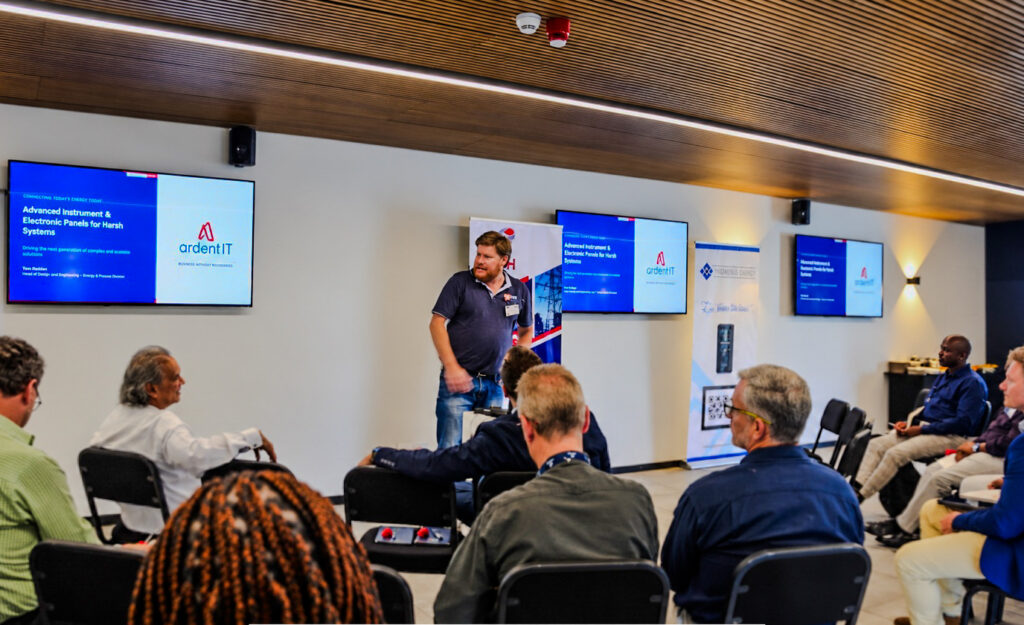
In hazardous industries, the central question is not how quickly an organisation can adopt AI. It is whether the technology helps people make safer, better-informed decisions without weakening accountability. That was the central message from Henry Boshoff at the recent Zero Harm, Zero Excuses event in Johannesburg.
For Boshoff, AI has a useful role in operational risk and control of work. It can bring together information that already exists across an organisation and help people identify hazards, conflicts and weak signals before work begins.
But the human decision-maker must always remain at the centre.
Compliance does not guarantee control
A permit can be correctly completed, reviewed and signed. That does not automatically mean the work is safe.
A risk assessment may have been completed. The relevant box may have been ticked. Yet the assessment might not reflect a recent incident, a change in operating conditions or a conflict with another job taking place nearby.
There is the difference between compliance and control.
Compliance confirms that a process has been followed. Control requires people to understand the actual conditions surrounding the work and to implement critical controls that reduce the safety risk.
That distinction applies well beyond permit to work. Shift logs, isolation registers, maintenance systems, incident records and operational reports all contain information that could influence a decision. In most organisations, that information already exists. The difficulty lies in bringing it together in a form people can use.

From searching for information to asking better questions
For many years, business intelligence was presented as the answer to this problem. Organisations collected more data, built reports and created dashboards.
The challenge was rarely a lack of data. It was making that data relevant to the person who needed it at the right moment.
An operator does not necessarily want to search through every permit in an area. They want to know precisely which activities could affect their work.
A person responsible for isolations may not only need a list of active isolations. They may need to know whether a new isolation could conflict with another job or create an unexpected release of energy somewhere else.
This marks a shift from searching for information to asking questions of the information already available.
An AI assistant embedded within an operational system could examine permits, maintenance records, incident history, shift logs and isolation data. It could then flag a possible conflict before work is approved, or identify a pattern that deserves closer attention.
The value of the AI analysis lies in helping people see what they might otherwise miss.
Making existing rules more useful
Control-of-work systems already contain rules that embed the procedures and authorisations necessary to perform work on hazardous plant or equipment. These rules may prevent a permit from being issued when a required step has been missed or when two activities appear to conflict.
However, rules are often configured at a particular point in time. They may be updated after an incident or audit, but the process depends on someone recognising the need for a change and then implementing it.
AI can examine a much wider body of operational information. It may identify that a procedure is being bypassed repeatedly, that similar work has resulted in problems elsewhere, or that a site is gradually accepting practices that fall outside the intended controls.
This matters because unsafe practices can become normal through repetition, and it requires a more independent analysis of risk than people routinely working on the plant can provide.
If twenty jobs have been completed in a particular way without an incident, that does not prove the procedure is safe. It may simply mean that the underlying weaknesses have not yet produced a visible consequence.
A system that can proactively identify these patterns gives the organisation a chance to act before an incident forces the change.
Assistance, not autonomous approval
Boshoff was clear about the limits of AI in control of work. The technology should assist people, not approve work on their behalf.
An AI system might identify a potential conflict, explain why a permit cannot proceed or suggest additional information for consideration. A competent person should still review the situation, make the decision and sign off on the work.
That human involvement provides more than accountability. It also creates an essential challenge function.
Users should be able to ask:
- Why has this been flagged?
- Which information supports the recommendation?
- Is the information relevant to this site and jurisdiction?
- What could happen if the issue is ignored?
- Is there another safe way to complete the work?
And an answer generated by AI without an explanation is difficult to trust, particularly in a high-risk environment.
Keeping sensitive data within the organisation
Industrial organisations are unlikely to send sensitive operational information to a public AI service without strong information security controls. Permit records, maintenance history, incident information and production data can contain commercially sensitive or security-critical details.
Boshoff described a model in which an AI agent operates within the organisation’s own application environment. It can access approved sources such as the permit system, maintenance platform, incident database and operational logs, while guaranteeing that the data is kept within the organisation’s infrastructure.
The output could be a written explanation, a list of potential conflicts, a recommended line of enquiry or a chart showing a developing trend.
The format of AI generated output matters. People do not all interpret information in the same way. A supervisor may want a concise summary, while an engineer may need the evidence behind the finding. AI can help present the same underlying information in a form suited to the person using it.
New technology creates new risks
AI will not remove the need for sound data, clear procedures or professional judgement. In some cases, it introduces additional risks.
Poor-quality or incomplete data will produce poor-quality answers. A badly framed question may generate an answer that sounds plausible but does not address the real issue. Users may also become over-reliant on the system, accepting its output without checking the reasoning or source.
There is a further danger in allowing AI to learn from behaviour that has gradually drifted away from the organisation’s standards. If repeated deviations are treated as normal, the system could reinforce the problem rather than identify it.
Strong governance is therefore essential. Organisations will need to manage access, privacy, security, data quality, model performance and the way users verify AI-generated recommendations.
Moving from reactive learning to earlier intervention
Many organisations improve their critical safety controls after an incident. An investigation identifies what went wrong, and the findings are added to procedures, training or system rules.
That approach remains necessary. It is also incomplete.
The opportunity offered by AI is to identify warning signs before an incident occurs. AI can compare current work with previous permits, incidents, audits and operating conditions, helping people see patterns that may not be obvious in isolation.
The technology cannot guarantee zero harm. No system can remove risk from industrial work.
It can, however, help people ask better questions, find relevant information earlier and challenge decisions before work begins. Used in that way, AI becomes another control within the operating system, rather than a replacement for the people responsible for safe work.
The measure of success will not be how much AI an organisation deploys. It will be whether workers receive better information, whether supervisors can make sounder decisions and whether weak signals are acted on before they become incidents.
To learn about how the new IntelliPERMIT AI capabilities support a comprehensive safe system of work without replacing human accountability in the process, please contact the team at Adapt IT.