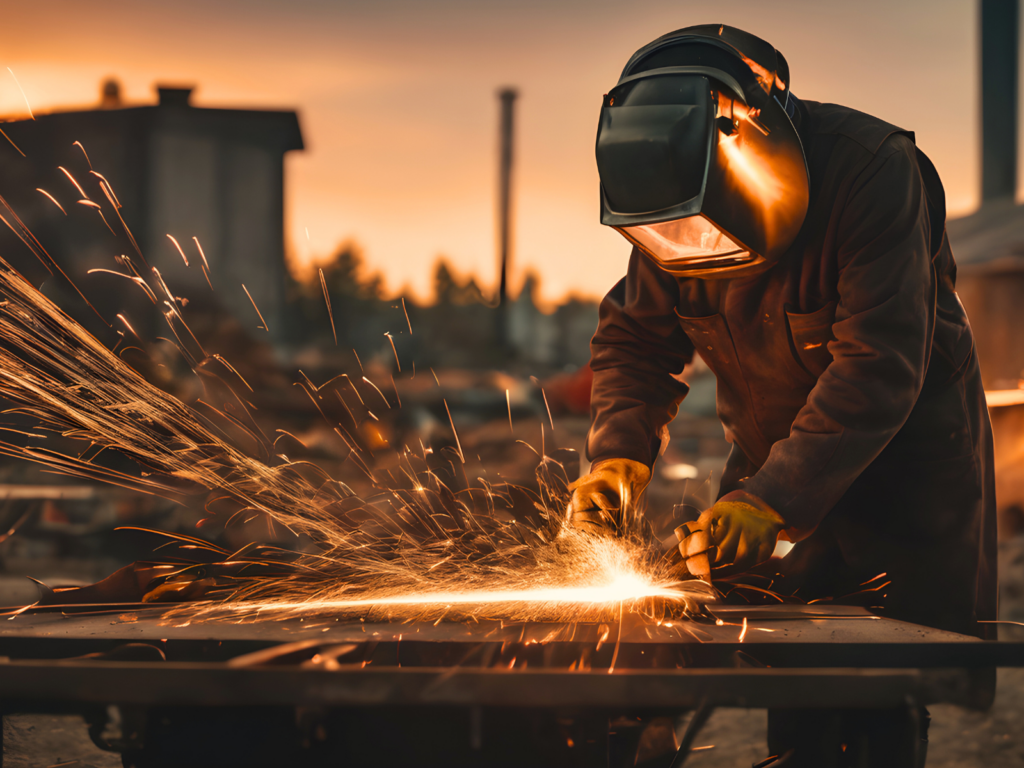
Hot work is frequently necessary in industrial operations, but the risk is never routine. Welding, cutting, brazing, grinding, and other spark-producing tasks introduce ignition sources into areas that may contain combustibles, flammable atmospheres, or hidden fire hazards. For Safety and Maintenance Managers, the challenge is not just issuing a permit to work. It is running a repeatable hot work permit procedure that checks the area, confirms controls, authorises the work, monitors conditions, and closes it out properly.
This guide explains:
- what a hot work permit is
- when a hot work permit is required
- the OSHA-informed controls that shape the process
- what a practical hot work permit checklist should cover
- how confined space hot work changes the risk picture
- how digital workflows can support better execution
1. What is a hot work permit?
A hot work permit is a documented authorisation used before work such as welding, cutting, brazing, or other ignition-producing activity begins in a non-designated area.
Its purpose is to confirm that:
- the work area has been inspected
- hazards have been assessed
- required controls are in place
- the work has been authorised by the right person
- the job can be performed safely under the stated conditions
Just as importantly, the permit should be treated as part of a broader hot work management process, not as a standalone checklist. In practice, that process usually includes:
- area inspection
- hazard identification
- control verification
- authorisation
- monitoring during the task
- fire watch where required
- post-work monitoring
- closeout
OSHA states that before cutting or welding is permitted, the area must be inspected by an authorising individual, and that a written permit is preferable before the work starts.
Reference: https://www.osha.gov/laws-regs/regulations/standardnumber/1910/1910.252
2. What counts as hot work, and what counts as cold work?
A practical way to explain hot work is to start with ignition risk.
Typical examples of hot work
Hot work usually includes tasks that generate:
- sparks
- flame
- heat
- molten material
- ignition-capable friction
Common examples include:
- welding
- oxy-fuel cutting
- brazing
- soldering with open flame
- grinding that produces sparks
- torch-applied heating
- thermal lancing
Examples of cold work
Cold work, in contrast to hot work, generally refers to tasks that do not introduce a significant ignition source.
Common examples of cold work include:
- bolting and unbolting flanged joints by hand
- manual assembly using hand tools
- pneumatic or hydraulic cold cutting methods designed not to create ignition sources
- pipe fitting using threaded or flanged connections instead of welding
- inspection activities
- instrument calibration
- non-sparking maintenance tasks in controlled conditions
- painting, cleaning, or replacing components where no spark or open flame is generated
Why this distinction matters
This distinction helps managers decide when the permit to work for hot work process should apply.
A useful rule of thumb is:
- if the task introduces an ignition source into an area not already designed and controlled for routine hot work, treat it as hot work
- if the task does not introduce an ignition source, it may be managed as cold work under other site controls
That said, local procedures still matter. Low-risk work will still require review, the specific safety controls and precautions will however be different.
3. When is a hot work permit required?
A hot work safety permit is generally required when work creates heat, sparks, or flame outside a designated safe hot work area.
In practice, Safety and Maintenance Managers usually trigger the process when work:
- creates sparks, open flame, or enough heat to ignite nearby materials
- takes place in production, maintenance, warehouse, utility, or process areas rather than a permanent hot work shop
- is performed near combustible materials, wall or floor openings, cable trays, lagging, insulation, or equipment that can transfer heat to hidden combustibles
- occurs on tanks, vessels, piping, or containers that may contain residues or vapours
- takes place in or around a confined space
- is performed by contractors in operating areas
- happens during shutdowns or overlapping activities where coordination is critical
OSHA also makes clear that hot work must not be performed where explosive atmospheres are present. If required controls cannot be implemented, the work should not proceed.
References:
- https://www.osha.gov/welding-cutting-brazing
- https://www.osha.gov/laws-regs/regulations/standardnumber/1910/1910.252
4. Hot work permit requirements: OSHA-informed controls that shape the process
A practical hot work permit procedure is built around a small set of controls that appear consistently in regulation and guidance.
4.1 Area inspection by an authorizing individual
Before cutting or welding is permitted, OSHA requires the work area to be inspected by an authorising individual. That inspection should confirm whether:
- the work can be done safely in place
- the work should be moved to a designated safe location
- the location is unsuitable and the job should not proceed
Reference: https://www.osha.gov/laws-regs/regulations/standardnumber/1910/1910.252
4.2 Written permit and authorisation
OSHA states that a written permit is preferable before cutting or welding is permitted. In operational terms, the permit becomes the record of:
- who reviewed the job
- what hazards were identified
- what controls were required
- who authorised the work
- when the permit was valid
Reference: https://www.osha.gov/laws-regs/regulations/standardnumber/1910/1910.252
4.3 Combustible control
Where practical, hot work should be moved to a designated safe location. If that is not practical, combustible materials should be removed or protected.
Key questions include:
- Are combustibles within range of sparks or slag?
- Are there floor openings, drains, penetrations, ducts, or wall cavities that could carry sparks?
- Could heat transfer ignite material on the opposite side of a wall, floor, or partition?
Reference: https://www.osha.gov/laws-regs/regulations/standardnumber/1910/1910.252
4.4 Fire extinguishing equipment
OSHA requires suitable fire extinguishing equipment to be immediately available for use. The permit process should verify:
- the equipment is present
- it is accessible
- it is suitable for the likely fire class
- responsible personnel know where it is and how to use it
Reference: https://www.osha.gov/laws-regs/regulations/standardnumber/1910/1910.252
4.5 Fire watch
OSHA requires a fire watch when combustible materials are within 35 feet of hot work, when openings expose combustibles, or where heat transfer could ignite nearby materials. OSHA also requires the fire watch to remain in place for at least 30 minutes after welding or cutting ends.
Reference: https://www.osha.gov/laws-regs/regulations/standardnumber/1910/1910.252
Additional guidance from CCOHS recommends:
- fire watch during breaks
- at least 60 minutes of post-work monitoring
- longer watch periods where risk conditions justify it
Reference: https://www.ccohs.ca/oshanswers/safety_haz/welding/hotwork.html
4.6 No-go conditions
If required fire protection and risk controls cannot be implemented, welding or cutting should not be performed.
This is one of the most important management principles in a hot work system:
- the permit process should be able to stop work
- the permit should never become a rubber stamp
- if conditions change, revalidation or suspension may be necessary
Reference: https://www.osha.gov/laws-regs/regulations/standardnumber/1910/1910.252
4.7 Standards and governance
NFPA 51B is a recognised standard for hot work fire prevention and is widely used to shape site procedures, responsibilities, and permit design.
5. A practical hot work permit procedure
For Safety and Maintenance Managers, consistency is very important. A workable permit to work for hot work should be simple enough for supervisors and contractors to follow in the field, while still ensuring that the controls are in place for higher-risk jobs.
Step 1: Define the task and location
Record the basics:
- the exact task
- the exact location
- equipment involved
- who will perform the work
- planned start and finish times
- whether the work is routine or non-routine
Step 2: Inspect the area
The authorising individual should inspect the work area before the job begins. Check for:
- combustibles in the immediate work area
- hidden exposures on the other side of walls or floors
- flammable atmospheres
- nearby simultaneous operations
- safe access and escape
- access to extinguishing equipment
Reference: https://www.osha.gov/laws-regs/regulations/standardnumber/1910/1910.252
Step 3: Identify and apply controls
Typical controls include:
- moving the job to a safer location where practical
- removing combustibles from the area
- protecting combustibles that cannot be moved
- isolating nearby hazards
- verifying ventilation
- confirming extinguishing equipment is immediately available
- assigning a fire watch where required
- defining post-work monitoring duration
The hot work risk assessment and permit process should align, especially for non-routine or higher-hazard tasks.
Step 4: Check for special conditions
Before approval, confirm whether the job also involves:
- a confined space
- a tank, vessel, or container
- process safety risks in a high-hazard operation
- contractor work requiring host-employer coordination
- overlapping permits or simultaneous operations
Step 5: Authorise the work
Issue the permit only after controls are verified. The permit should show:
- who authorised the work
- the validity period
- required precautions
- any hold points
- conditions that would invalidate the permit
Step 6: Monitor during the job
Conditions can change during maintenance work. The process should make clear:
- who can stop the job
- what changes trigger re-evaluation
- how suspensions or extensions are handled
- how the team communicates changes in field conditions
Step 7: Fire watch and closeout
Where required:
- maintain the fire watch during the task
- continue the post-work fire watch for the required duration
- inspect the area after completion
- confirm no smouldering sources remain
- close the permit only after the area is safe
References:
- https://www.osha.gov/laws-regs/regulations/standardnumber/1910/1910.252
- https://www.ccohs.ca/oshanswers/safety_haz/welding/hotwork.html
6. Hot work permit checklist: what to verify before work starts
A pre-start hot work permit checklist helps turn policy into field execution.
Work and location
- task type confirmed: welding, cutting, brazing, grinding, or similar
- exact location identified
- permit start and end times defined
- area classification or operating context understood
Area condition
- area inspected by an authorising individual
- work moved to a designated safe location if practical
- combustibles removed or protected
- openings, drains, penetrations, ducts, adjacent rooms, and lower levels reviewed
- heat-transfer risk assessed
Equipment and emergency readiness
- suitable fire extinguishing equipment immediately available
- hot work equipment in serviceable condition
- hoses, leads, regulators, torches, and grounding checked
- gas cylinders positioned and handled correctly
People and roles
- authorising individual identified
- performing authority identified
- fire watch assigned where required
- workers and contractors briefed on controls and stop-work conditions
Timing and closeout
- permit validity period defined
- post-work fire watch duration defined
- closeout inspection requirement defined
- revalidation rules clear if conditions change
Special risk checks
- confined space involvement assessed
- container or vessel work assessed for cleaning, ventilation, testing, and venting needs
- additional risk assessment completed where site conditions require it
7. Special case: confined space hot work permit requirements
Hot work in a confined space is not just hot work in a smaller area. It often requires layered controls from both the hot work process and the permit-required confined space process.
OSHA’s confined space rules define hazardous atmosphere thresholds that include:
- oxygen below 19.5%
- oxygen above 23.5%
- flammable gas or vapour above 10% of the lower flammable limit
Reference: https://www.osha.gov/laws-regs/regulations/standardnumber/1910/1910.146
A practical approach is to treat this as a layered permit scenario:
- assess hot work hazards and controls
- determine whether permit-required confined space controls also apply
- evaluate atmospheric conditions
- define ventilation and monitoring needs
- confirm rescue and attendant arrangements where required
Additional OSHA confined space resources:
https://www.osha.gov/confined-spaces
For hot work on containers, tanks, or similar equipment, research notes indicate the need for:
- cleaning
- ventilation
- testing
- venting
before heat is applied. This matters because residues and vapours can create ignition or explosion hazards even when the container appears empty.
Reference: https://www.osha.gov/welding-cutting-brazing
8. How to issue a hot work permit consistently across employees and contractors
In many plants, inconsistency is the real weakness. The permit exists, but each department, shift, or contractor uses it differently. That leads to uneven inspections, uneven fire watch decisions, and uneven closeout.
A more consistent issuing process usually includes:
8.1 One standard workflow
Use one site-approved hot work process for employees and contractors, with clear role definitions for:
- requester
- authorising individual
- performing authority
- fire watch
- permit closeout responsibility
8.2 Clear decision points
Build the procedure around a few hard gates:
- Is this hot work?
- Is the location suitable?
- Are combustibles removed or protected?
- Is a fire watch required?
- Does the job involve a confined space, container, or other added hazard?
- Can all required controls be implemented?
If the answer to the last question is no, the permit should not be issued.
8.3 Contractor alignment
Contractors may bring their own forms or habits, but the host site should still control:
- the local permit standard
- the area review
- the authorisation process
- the closeout requirements
8.4 Training and records
Because hot work is part of a broader management process, not just a checklist, consistency depends on:
- training
- supervision
- documented records
- field verification
This matters even more in high-hazard operations where hot work controls can intersect with process safety management expectations.
Reference: https://www.osha.gov/process-safety-management
In practice, how to issue a hot work permit consistently comes down to one workflow, one authorisation standard, and one closeout expectation across all parties.
9. Digital workflow support for hot work permits
For many teams, the issue is not understanding hot work. It is executing the process reliably across shifts, workgroups, and contractors while keeping records that are easy to retrieve later.
Digital workflow support can help by making the permit process more structured and traceable. In a system such as IntelliPERMIT Permit to Work, organisations can support:
- digital authorisation records
- required control checks
- structured fire watch hold points
- closeout steps
- linked risk assessments
- mobile field execution
- reporting across hot work and related workflows
Used properly, digital tools can support:
- consistent permit templates and required fields
- traceable approvals and authorisation records
- structured fire watch and closeout steps
- integrated workflows for hot work and confined space scenarios
- reporting that supports review and audit preparation
What digital workflow should not be expected to do:
- replace competent supervision
- replace atmospheric testing equipment
- replace fire protection measures
- replace site-specific procedures
- guarantee compliance automatically
For organisations looking to mature their approach, the value of a digital workflow is less about the form itself and more about control: making sure the right checks happen, at the right time, with a usable record afterward.
IntelliPERMIT draws on 30 years of experience and is used by industrial organisations including Rio Tinto, Glencore, Eskom, and QatarEnergy. In this context, its role is to help standardise permit-to-work execution and improve traceability across complex operations.
Conclusion
A hot work permit is most effective when it is treated as one part of a controlled process:
- inspect the area
- verify controls
- authorise the work
- monitor conditions
- maintain fire watch where needed
- complete post-work checks
- close the job properly
That is the difference between a permit that only documents activity and a permit system that actively reduces risk.
For Safety and Maintenance Managers, a practical next step is to review your current hot work permit procedure against three questions:
- Does it clearly require area inspection by an authorising individual?
- Does it define when fire watch and post-work monitoring apply?
- Does it handle confined-space and contractor scenarios consistently?
If not, that is the right place to tighten the procedure before the next job starts in the field.